

Reflections from Patagonia Frontiers founder John Hauf
This past January, the Chilco River did something extraordinary. It changed course.
The river has flowed through our valley for as long as anyone here can remember, dating back to when Don Moncho's father first settled here in 1928. Then, seemingly overnight, it carved an entirely new riverbed through the forest, some 125 meters from its former course. A river crossing we'd navigated for decades was suddenly nothing but dry cobblestones.
Pretty impressive, I thought. I just hope we don't lose the guest house.
Chilco River overflowing at Patagonia Frontiers Main Ranch
We thought about whether we could intervene. But after surveying the scene, the answer was obvious: not even a backhoe was going to persuade that river to go back where it belonged.
Living in Patagonia, you're constantly reminded that the land has its own ideas.
After all these years, I still find that humbling. This is home, a place I've explored for decades, and yet I'll never finish discovering it. Sometimes I return to a familiar place and find the landscape utterly transformed. Other times I round a bend in the lake and the view of home stops me in my tracks, just as it did the first time.
There's always something new to learn here. And often, the most valuable lessons aren't the ones we set out to discover.
The lessons we don't plan
One of my favorite moments from this past season came during a three-week high school wilderness education program. The students had spent their days studying glaciers, physical geography, and the remarkable ecosystems surrounding our ranch. But on this particular day, we were headed into the forest to explore peat bogs.
Things didn't go quite as planned. Someone forgot something. We changed our destination. What I considered a leisurely wander through the forest, the students called bushwhacking.
By the time we reached our destination, a few students were hot, hungry, thirsty, and thoroughly fed up. Finally, two of them complained that they hadn't eaten or had anything to drink since leaving camp that morning.
I looked at them and asked, "Well, why not?"
There was a moment of silence. Then came the realization: they'd spent weeks learning to prepare for the backcountry, to anticipate their needs and take responsibility for themselves. And on this particular day, they hadn't done it.
What impressed me most was what happened next. Rather than continuing to complain, they recognized that they could choose how to respond. They took control of their attitudes, and the day changed.
That's the sort of learning that happens beyond the standard curriculum.
We often talk about the wilderness as a classroom, and certainly it's an extraordinary place to study glaciers, ecology, and the natural world. But the real magic happens when students begin making decisions for themselves, navigating uncertainty, and discovering what they're capable of.
Sometimes that means letting them make mistakes. Sometimes it means cooking dinner for their tentmates when they're cold, wet, and exhausted. And sometimes it means discovering that the person who offers to fetch water when they don't have to has taught you something about generosity that you'll never forget.
[PHOTO: Students hiking, working together in the field, or engaged in hands-on learning. Ideally candid vs. posed.]
The people who make it possible
Speaking of generosity, I've been thinking a lot about the community that makes Patagonia Frontiers possible.
This past season, we were preparing for a particularly ambitious horse expedition when I realized we simply didn't have enough horses. Once I’d tallied the guests, guides, saddles, and gear, we needed more horses than I'd bargained for.
Then Don Moncho, whose family has lived in this valley for generations, said, essentially, "Come on, let's go talk to my friend."
And we did. Through that friendship, we found the four additional horses we needed. Don Moncho had vouched for me, putting his own reputation and relationships on the line because he wanted us to succeed. That's something you can't put a price on.
Over the years, our Chilean neighbors have taught me a great deal about what it means to be part of a community. When someone needs help, you help. You don't stop to calculate whether they've done enough for you in return.
We sometimes describe Patagonia Frontiers as an ally to surrounding communities and conservation efforts. But much of what that means in practice is simply being a good neighbor.
I'm equally heartened by the many staff members who return season after season, and by the friendships that span generations. We've built something together that extends far beyond any single expedition or season.
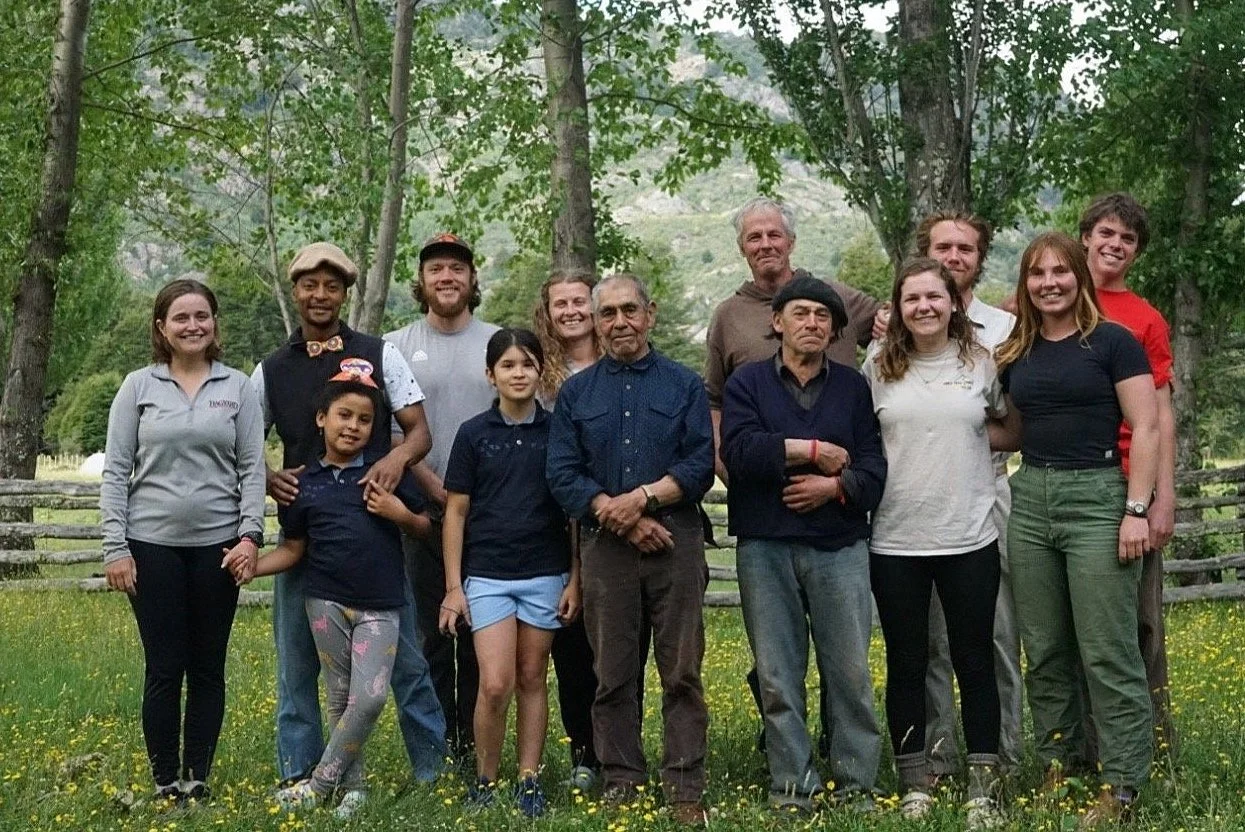
Patagonia Frontiers Community
What makes a journey successful?
I've spent most of my life teaching and guiding in wild places, and my understanding of success has evolved over the years.
I remember expeditions attempting to cross the Northern Patagonia Icefield. Some groups faced terrible weather from the start. They'd spend four days trying to cross a river, only to discover someone had left a bag of rations behind and have to cross it twice more. They'd finally reach the icefield, only to spend the next five days digging their tents out from under the snow. Someone's boot would disappear beneath a snowdrift, prompting an elaborate search. Before they knew it, their 35 days were nearly up, and they'd have to turn around without completing the crossing.
And yet, they'd come back laughing, exhilarated by everything they'd experienced and overcome together. An absolute success, in their eyes.
Then you'd have another group blessed with perfect weather. They'd reach the icefield, climb a few peaks, complete the crossing, and accomplish everything they'd set out to do. But for whatever reason, they never quite learned to work together, to communicate well, or to recognize one another's needs. On paper, they'd knocked it out of the park.
So which expedition was more successful?
I've come to believe there's a lot of value in the attempt itself. In how we respond when things don't go as planned, how we look out for one another, and what we discover about nature and ourselves in the process. Whether we reach our destination is only part of the story.
That's what I hope people take home from Patagonia Frontiers. A deeper appreciation for this remarkable place and the people who call it home. A greater understanding of their own capabilities, and perhaps a different way of seeing the world. And, I hope, a desire to help protect the wild places that have given us so much.
As we prepare to welcome another season of guests and students to the Soler Valley, that's what excites me most: the opportunity to share this extraordinary place, to keep learning from it, and to see what discoveries await.
Because one thing I've learned after all these years in Patagonia is that you never quite know what the wilderness has in store. And I wouldn't want it any other way.
[CLOSING PHOTO: A warm, inviting scene at the ranch, perhaps the crew gathered around a fire, guests returning from an expedition, or the evening light over the valley.]
— John Hauf, Founder, Patagonia Frontiers